Showing posts with label Dickens. Show all posts

Tuesday, February 7, 2012

Happy 200th Birthday, Charles Dickens! (Featuring Bonanza!)

Two hundred years ago today, a man named Charles Dickens was born in England.


I don't know very much about Charles Dickens, but I did enjoy the 2008 adaptation of Little Dorrit and A Christmas Carol is a very good Christmas classic! I am interested in becoming better acquainted with his works, though.

I always enjoyed this episode of the show Bonanza where Charles Dickens visits Virginia City. I knew that he visited America and that he was very popular, and though I'm not sure how accurate a protrayal of Charles Dickens this is, I enjoyed the episode nevertheless.


Also, don't forget to head over to Old-Fashioned Charm and Of Trims and Frills and Furbelows for their Dickens events, which will continue for the rest of the week!


 God Bless,
 God Bless, Miss Elizabeth Bennet

Sunday, February 5, 2012

Celebrate Charles Dickens's Birthday!

Charles Dickens's 200th Birthday is on February 7th, so to celebrate his birthday, two lovely blogs are holding week long events!


Old-Fashioned Charm
There's going to be "Charles Dickens Birthday Week at Old-Fashioned Charm. There will be special posts about Charles Dickens, Games to play, and a giveaway!


Alexandra from Of Trims and Frills and Furbelows  is holding "Dickens' Bicentennial Celebration Week". Alexandra is going to have film comparisons, a dream casting, and video clips!

I encourage you to check out both events! 


 God Bless,
 God Bless, Miss Elizabeth Bennet

Friday, December 2, 2011

Two New Great Expectations... Two New Miss Havishams

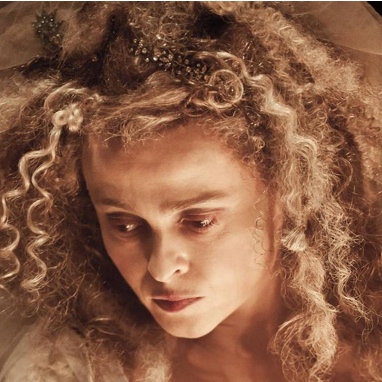
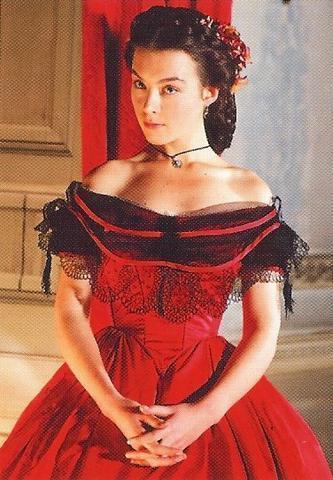
 You may have heard that there are going to be not just one, but two new adaptations of Great Expectations. And you may have also heard that two period drama actresses, Helena Bonham Carter (The King's Speech) and Gillian Anderson (Bleak House), are both to play Miss Havisham. But have you seen the pictures of their Miss Havisham's yet?

Helena Bonham Carter


Gillian Anderson


I noticed that Helena Bonham Carter's Miss Havisham is wearing Georgian Fashions (notice the heavily trimmed sleeves), while Gillian Anderson's is wearing Regency fashions. If the story starts around 1812, Helena Bonham Carter's Miss Havisham will have fashions that are at least fifteen years old and Gillian Anderson's would have more current fashions for the time. Would Gillian Anderson's Miss Havisham be portrayed as being much younger than how some of us might picture Miss Havisham? Of course, I've never read Great Expectations, so I can't really say which is more accurate to the story.

I also heard that one of the versions will have a different ending than the book...

What do you think? Who do you think will be the better Miss Havisham?

God Bless,
 God Bless, Miss Elizabeth Bennet

Monday, July 11, 2011

Review: Great Expectations

Box Art
I've never read Great Expectations, but I was aware of it and knew it was a classic. I noticed this film in a store once, but I kind of glanced past it. After a while, I noticed this movie on Youtube, so I thought I would give it a try on Youtube and see if I liked it or not.

Synopsis
Young Pip is invited to the home of Miss Havisham to entertain her and Estella, a orphan that she raised after her fiancee abandoned her on her wedding day. Years later, Pip comes into a great fortune from an unknown benefactor that quickly changes his life.

Characters
I only recognized three members of the cast. Though I haven't yet seen Amazing Grace (but I really want to!), I knew of Ioan Gruffudd (though I never realized it, he was also in 102 Dalmations, which I loved to watch as a kid) and he was Pip in this version of Great Expectations. Justine Waddell from Wives and Daughters was also in this adaptation as Estella. The last actor that I recognized: I saw Jaggers come onto the screen and I thought "Where have I seen him before", and it dawned on me that he was in Star Wars Episode I: The Phantom Menace (though not my favorite Star Wars movie). Other than those three, I didn't recognize anyone else in this Great Expectations.

Miss Havisham (seated) with young Estella
and young Pip
The acting overall was good. However, this was one of those movies where you like a couple of character, and the rest you either don't like too much or they just irritate you. Characters like Joe and Herbert I found to be likable, and, at first, I found Pip likable. Pip kind of got on my nerves after he got money: I thought he started to spend money irresponsibly, but this was probably the angle that Dickens was going for to prove a point; maybe Pip was similar to Mr. Dorrit in Little Dorrit -- how Mr. Dorrit got his money and started to act like a jerk to everyone from his past, only in Little Dorrit, there wasn't much of a sign that he was running out of money while he was spending it while in Great Expectations there is talk of Pip running out of money. But back to my original point, before Pip became rich, he seemed a lot more likable. Other characters, like Miss Havisham, Estella, and Mrs. Joe, I couldn't like too much. Well, maybe I felt more sorry for Estella after she got married, but before that I really didn't like her. Miss Havisham seemed to be a little "off her rocker" (for lack of a better phrase), and Mrs. Joe seemed to treat young Pip unfairly all the time.

Scenery
Since the story isn't really a happy story, you won't find much bright, colorful scenery as you would in other period dramas. Most scenes have a grayish tinge to them and, for the second half of the movie, take place in the middle of London. There are some scenes in the country, but they aren't anything spectacular.

Costumes
Justine Waddell as Estella
The costumes were good! Estella's dresses were very lovely to look at; they seemed to dress her in a lot of red (at least to my memory). Miss Havisham had only one dress: a Regency era wedding dress. It would make sense for her to have Regency fashion: yes, she is wealthy, but she also hasn't left her home in a very long time and she is also older.

Music
There wasn't much music to speak of. If there was a soundtrack to this miniseries, it would be composed of probably only one song: a very eerie song that seemed to pop up every once in a while. 

Overall: 2/5
I found this Great Expectations to be only tolerable. Some of the costumes were okay to look at, but not much else recommended itself to me. While the acting was good, I found a lot of the characters to be dislikable or irritating. I'm not quite sure if this version is accurate to the original story (though, from what I read on a synopsis, the ending was different), so if anyone out there has read the novel and can compare it with this adaptation, I would be thankful. Honestly, I probably wouldn't watch this version again, but maybe if a new version of Great Expectations came out (which, from what I hear, there are two in the making), I might watch it.

Great Expectations is available on DVD. It is a two part movie that runs all together for 168 minutes.

Monday, June 27, 2011

Review: Little Dorrit

I'm a big fan of the 2008 miniseries of Little Dorrit, and I've read a little bit of the book (though a small part of it), but everything seemed to follow the story okay (maybe a couple of things left out or changed, but nothing too bad). I've heard of this version of Little Dorrit, but I didn't think too much of it, but I saw it on Netflix's instant streaming, so I thought that I would give it a try.

Synopsis
VHS Box Art
Synopsis from Little Dorrit (2008)
William Dorrit is imprisoned in the Marshalsea for debt. His daughter, Amy (also known as Little Dorrit), lives with him in prison and goes out to support him secretly because of his pride. Amy gets a job doing needlework for Mrs. Clennam whose husband and son are overseas in China. When Mrs. Clennam's son Arthur returns from China, he brings word that his father has died and that his dying wish was to correct a wrong. Arthur notices that Amy is working for his mother, and learns that her father is imprisoned in the Marshalsea for numerous debts. He suspects that his family might have something to do with this, and he tries to right the suspected wrong.

This miniseries is divided into two parts: the first part is Arthur Clennam's story, while part 2 is Amy Dorrit's story.


Characters/Presentation of Story
There were three members of the cast that I recognized: Sir Alec Guinness (easily recognizable from Star Wars Episodes 4-6) was William Dorrit; Derek Jacobi (The King's Speech) was Arthur Clennam; and Liz Smith (Lark Rise to Candleford) had a couple minute scene early in Part 2.
Derek Jacobi as Arthur Clennam


I had a lot of issues with this miniseries. First of all, I didn't like how they told about 95% of the story through Arthur's eyes, then part 2 comes and you have to rewatch the entire thing through Amy's eyes. I could understand why they did this if the book was actually like that, but it isn't. I've read about 200-250 pages of Little Dorrit (which I really enjoyed, but I fell away from reading it, so I'll have to start over one of these days... Oh well.), and the book goes back and forth between the different plotlines (for example, there will be a couple of chapters that focus on Arthur and then a couple that focus more on Amy). So the directors told the whole story (complete with spoilers and holes) and then go to Amy where you can tell what's going to happen next? It didn't seem to make much sense to me...

The next issue that I had was what they left out of this miniseries. In the book (and the 2008 miniseries), there are three main plots: Amy Dorrit and her life taking care of her family, Arthur Clennam and how he's trying to find out a family secret, and the escaped convict Rigaud (who does become a pretty big part of the story). They included the first two plots, but completely left out the third. Since that plotline that includes Rigaud becomes very important at the end of the book, they completely had to rework the ending... and not in a good way. The ending just turned out to be a big mess.

There were even subplots left out of the movie (which may be a little more forgivable since you can usually work the story around enough without changing the story and leaving less important parts out). I also didn't like that they mixed up the order of scenes. Like I've said before, I've only read 200-250 pages of Little Dorrit, but even with that little bit that I've read, I could already tell that scenes were mixed up.

If characters weren't left out, their part in the story was changed severely. The Meagles were only there briefly (and you get the impression that Arthur knew them for a really long time), you don't get to see Pet Meagles after she gets married, Daniel Doyce dies in the middle of the story (which wasn't necessary and another reason the ending had to be reworked) and Pancks's had a bigger role in the end than he should have.

I will say this, however. They did do a good job of making Maggy and Pancks look like their characters described in the book and Amy did look young. However, I thought that Derek Jacobi looked too old to be Arthur. In the book, Arthur is supposed to be about 40, but in this movie, he looked like he was in his fifties.


Scenery
The Marshalsea
The scenery was okay, but I thought that the Marshalsea was too bright for a prison. I know I usually like vivid scenery with lots of colors, but I don't think that it worked for the Marshalsea. I'm not saying to make it black and white, but tone down the colors a little: it is a prison after all. I will say that they did succeed in making the Marshalsea look cramped.


Costumes
The overall quality of the costumes wasn't too bad. They looked okay and seemed to be constructed properly. However, I think that these costumes are inaccurate to the time period. Little Dorrit takes place around 1826, which would be after the Regency Era and before the Romantic Era. From the looks of the costumes, it seemed like they were more from the 1840s and even 1850s: the way that the sleeves were, the poof of the skirt, and some of the necklines screamed 1840s or 1850s.

Sarah Pickering as Amy Dorrit


Music
I wasn't too impressed with the music score. When music did come on, it usually came on blaring and overly dramatic at times. It was also really difficult to hear some of the speaking parts, namely Amy, but other characters were really hard to hear too...

Overall: 1/5
Honestly, if you want to watch Little Dorrit and really enjoy it, watch the 2008 miniseries: the costuming was closer to the time period (although some seemed like they were from the 1830s, but it would be closer than the 1840s/1850s), the acting was so much better, and it was far, far more interesting. This miniseries is very dull (which it shouldn't be since the story itself is interesting) and even hard to hear (I know Amy is supposed to be quiet, but to the point that you can't hear her?). I will say that this miniseries doesn't include the questionable scenes that were in the 2008 miniseries (although those scenes can be skipped over fairly easily), so if you wanted to show a younger audience this Little Dorrit, there really shouldn't be a problem with questionable scenes: the hard part would be actually keeping the kids interested in this movie...

Little Dorrit is available on VHS or on Netflix instant streaming. It is rated G and runs for 357 minutes.
Monday, June 20, 2011

Review: A Christmas Carol

I'm going to say it: I'm not a Jim Carrey fan. I've never been much of a fan of his acting since it is usually always too wild for me. I reluctantly watched this version of A Christmas Carol knowing that Jim Carrey was going to voice many of the characters, but I thought I would give it a try since I heard that Colin Firth (Mr. Darcy in Pride and Prejudice) was in there and I wonder how he did in it.
Poster

Synopsis
It's Christmas time and everyone is in a great mood except for Ebenezer Scrooge, a stingy old man who does not like Christmas. On Christmas Eve, Scrooge is visited by the ghost of his former business partner who announces that Scrooge will be visited by three more ghosts.

Characters
There are a couple of famous actors in this film. Jim Carrey is a well-known actor, and he plays a good deal of the main characters. Colin Firth is also in here as Scrooge's nephew, Fred. Other well-known actors include Gary Oldman and Robin Wright (known for her role in The Princess Bride).

Getting a little too silly, aren't we Mr. Scrooge?
Jim Carrey was slightly tolerable as Scrooge at the beginning (but only slightly), but it didn't take too long before he started to get annoying. Many of his mannerisms were something that one would find in some sort of children's comedy and not something that should have been in A Christmas Carol. And I don't know why they had a five minute scene in which Scrooge was running all over London, getting smaller and smaller, voice getting higher and higher, and the whole thing becoming just about ridiculous. By the end of the movie, when Scrooge is overjoyed, you can tell right away that it's Jim Carrey and not the overjoyed Scrooge that should be in the movie.

Could they have made the ghosts any more grotesque? When I pictured Jacob Marley, I never pictured him as some sort of zombie ghost whose jaw started to dislocate itself towards the end of his visit. They also made the Ghost of Christmas Past a bit creepy towards the end of his visit too, and I didn't like the way that he was portrayed either: they made his head a giant candle flame? And what about towards the end of the Ghost of Christmas Present's visit: the boy and girl representing Ignorance and Want seemed a little more mature than what I've pictured. And the Ghost of Christmas Yet to Come was more of a hooded shadowy figure and not... well, three dimensional like the other ghosts. And seriously, some of the characters (the Ghost of Christmas Yet to Come, Ignorance, and Want) looked more like they came out of The Lord of the Rings than out of A Christmas Carol.

Animation
I have this section in place of the scenery section since this is an animated movie. There seemed to be something quite odd about the animation the whole time. Scrooge looked too tall, too thin, and too lanky. Even if that was the angle they were trying to go for, he still looked unnaturally thin. Bob Cratchit also looked kind of odd. I think I also remember that the way the fabric on the clothes seemed to move very oddly.

Costuming
Belle's dress seemed to be accurate (not pictured here fully,
sorry), but Regency women did not wear their hair down.
In the background/middle, we have old Scrooge and the
Ghost of Christmas Past with a candle flame as a head...
This is going to be a little hard reviewing the costumes for an animated movie, since no one actually made the costumes but drew them, but I'm going to give it a try. Overall, the costuming didn't look too inaccurate for a good portion of the movie. My complaint lies in one of the flashbacks. At the Christmas party in Scrooge's past, there were Regency era costumes (which would be correct since at that time, Scrooge would have been a young man), but the Fezziwigs wore older Georgian clothes (which, since they were already an older couple in the Regency era, wouldn't be hard to believe). While Mr. and Mrs. Fezziwig were dancing (a dance which looked more modern than period: who ever heard of flips during a Regency dance?), you can briefly see that Mrs. Fezziwig was wearing drawers. Drawers were invented in 1806, but very few women wore them, and those few women were usually young. It would be very, very unlikely that Mrs. Fezziwig would be wearing drawers (she would probably be of the generation that thought they were hideous and wouldn't dream of wearing them). The other thing that I noticed was inaccurate was while young Scrooge was dancing with Belle (later his fiancee) at the party, her hair was half down. Regency women never wore their hair down like that in public, let alone at a ball. Only very young girls could get away with having their hair down, but never young ladies looking for a husband. And it seemed like she was the only one with her hair down. Other than that, I don't have any more complaints about the costuming.

Music
The music was actually nice. A lot of the songs were Christmas carols that were sung very nicely. I also recognized a dance song from Pride and Prejudice (1995). The music was probably one of the few things that partially saved this movie.

Overall: 1/5
Scrooge's nephew, Fred (Colin Firth) serving up Christmas
dinner.
Probably the only redeeming qualities of this film were the music (which was nice) and that Colin Firth was in the movie (though for too short a time). Other than those two aspects, the rest of the film was not good. Jim Carrey was just too wild towards the end, the animation wasn't all that great, and the costuming could have been better. I can't even say that if you have small children who might enjoy it watch it: there were scary scenes that might frighten small children; wait until they get older and they might not enjoy the film because Jim Carrey just doesn't fit the role(s) well or it gets too silly. If I were you, I would save my time and watch another version of A Christmas Carol (the Patrick Stewart version, which I've seen half of, seemed to be pretty good; my dad and my sister are fond of the Alastair Sim version, but I've never seen it); if you have young kids or siblings or relatives, the Muppet's Christmas Carol might be more worth watching than this version.

A Christmas Carol is available on DVD and Blu-ray. It runs for 96 minutes.

Friday, December 31, 2010

Charles Dickens in Bonanza

Since I'm on Christmas break, I actually have time to watch TV shows that I like to watch, but are always on while I'm at school. One of these shows is Bonanza, the classic Western television show. I remembered seeing this episode ("A Passion for Justice") a while ago, but I only saw the second half of it. I finally found it on YouTube in six parts and watched the whole thing. In this episode, Charles Dickens (played by Jonathan Harris, known for his role as Dr. Smith in the show Lost in Space) pays a visit to Virginia City. He finds himself in legal troubles, however, when he finds out that his books are being printed in violation of his copyright.


I don't know how accurate a portrayal this would be of Charles Dickens, but I found the episode enjoyable. I hope you enjoy it too! :-)

Monday, October 11, 2010

Review: Little Dorrit

Over a couple of weeks, my mom, my sister, and I watched Little Dorrit. We started to watch it one evening and next thing we knew it was 12:30 p.m. We wanted to keep watching, but it was late. It kept us all interested: here are my thoughts.

Synopsis

William Dorrit is imprisoned in the Marshalsea for debt. His daughter, Amy (also known as Little Dorrit) (played by Claire Foy), lives with him in prison and goes out to support him secretly because of his pride. Amy gets a job doing needlework for Mrs. Clennam whose husband and son are overseas in China. When Mrs. Clennam's son Arthur (Matthew Macfayden) returns from China, he brings word that his father has died and that his dying wish was to correct a wrong. Arthur notices that Amy is working for his mother, and learns that her father is imprisoned in the Marshalsea for numerous debts. He suspects that his family might have something to do with this, and he tries to right the suspected wrong.


Characters

BBC does another great job with selecting a great cast. There were recognizable actors and actresses in Little Dorrit: Tom Courtenay (Doctor Zhivago (1965)), Freema Agyeman (Doctor Who), Andy Serkis (Lord of the Rings), Matthew Macfayden (Pride and Prejudice (2005)), James Fleet (Sense and Sensibility (1995)), and other actors that you may recognize.

I thought that Claire Foy played Amy Dorrit quite well. Amy Dorrit is supposed to be around 21 years old, but she's supposed to look like a child, and Claire Foy pulled it off well. Her face was freckled to make her appear young which worked really well for the role. She also acted the part well: Amy is meek, quiet, and hard working, and it showed in this adaptation.

Andy Serkis, who many would recognize as Gollum from The Lord of the Rings, plays the escaped convict Rigaud. I've got to say, that whenever he appeared on the screen, my mom, my sister, and I were like "Oh no! What's going to happen next!?" There was always something that followed that man. I won't give any spoilers, but let's just say he made the story all the more interesting.

Scenery

Multiple characters from Little Dorrit from different
classes and ages. Notice differences in dress between the
classes and the dark, London setting.
I did not mind the scenery, but there is a concern that I have. The Marshalsea is supposed to be a big, dirty prison in very poor conditions, but when I was watching it, it didn't seem that bad. It didn't look too dirty, and sure the prison rooms could use some renovation and maybe a scrub down to get rid of the dust, but it didn't seem like it was really bad. It seemed like the only inconvenience was that it was a prison and that you couldn't leave. I mean, don't get me wrong, I wouldn't want to stay in a place like that, but for a prison in the ninteenth century, I guess I pictured it a lot dirtier.

There was used of dark overtones for the scenes in London, which seemed appropriate. **Spoiler** The first half of the series takes place in London before William Dorrit found out about his fortune, when life was harder for the Dorrits. **End of Spoiler** Also at Mrs. Clennam's home, dark overtones were used to show that there were dark secrets there. Bright colors were used for the scenes in Italy, which featured very nice architecture. I liked the brighter colors and the scenery there better than the dark overtones in London.


Costumes

Amy Dorrit in her usual dress,
cloak, and apron.
I did like the costumes in this miniseries. Little Dorrit takes place around 1826, which is in between two eras: the Regency era (which ended at about 1820) and the Victorian era (which started in the 1830s). Both Regency era dresses and 1820's fashion were used in this miniseries. Generally speaking, the Regency dresses were worn either by the poorer women or by older women (i.e. Mrs. Clennam, who was very old in the story). This would make sense because most likely poorer women were handed down clothes that were still good; these "hand-me-downs" would be outdated clothes from the Regency era considering that when the story takes place, the Regency era did not end that long ago. Mrs. Clennam, being both old and infirm, probably did not get a chance to go out and buy the latest fashions, so she probably found her current dresses to be suitable. The 1820's dresses were worn mostly by the rich who could afford to go out and buy the latest fashions or could have dresses made for them.

My personal preference: I preferred the poorer clothes to the richer clothes. It could be because I love Regency era clothing, or because I don't particularly care for the large sleeves of the later 1820's fashions, or because I liked the simplicity of the clothes. To me, some of the richer clothes seemed gaudy and outlandish to me. But again, that's my personal opinion.

Overall: 4/5
I really like this miniseries. I liked that the plot was very interesting and that all of the subplots came together nicely at the end. The cast acted very well, and the costumes were very nice. But there are a couple of things that you should be warned about. There is some violence, a scene with blood (only one scene that can be fast-forwarded through), and a questionable scene that, while it is not explicit, it is still a little disturbing; I will say that the scene is short, so you could even fast-forward through that too. Other than those three things, this miniseries is very good and interesting. It definitely keeps you guessing and holds your attention throughout.

Little Dorrit is made up of fourteen episodes (two hour long and twelve half hour long). The entire miniseries is 452 minutes long and can be bought on DVD at Amazon.